

National Institute of Technology
Japan
Bio Hisayuki Sasaoka received his Ph.D. in Engineering from the Graduate School of Engineering, Hokkai-Gakuen University in 2000. From April to September 2000 he was a postgraduate at the Graduate School of Engineering, Hokkaido University. He then served in the Department of Electronics and Computer Engineering at the National Institute of Technology (Asahikawa KOSEN), Japan, starting from October 2000 until March 2025. Since April 2025 he has been a Professor (Thailand KOSEN) at the National Institute of Technology Headquarters (Japan) and a visiting professor at King Mongkut’s University of Technology Thonburi (Thailand). His research interests include e-Learning, Artificial Intelligence, Natural Language Processing, Machine Learning, and Machine Translation.
Title Engineering Education and Generative AI in Thai KOSEN: A Preliminary Study of AI-Generated Feedback in Project-Based Learning
Abstract Thailand’s
KOSEN program, developed in collaboration with Japan, provides a
distinctive setting for practical engineering education. This
invited talk will first introduce the program’s educational
context and its emphasis on hands-on learning and project-based
learning (PBL). It will then present a preliminary study of
generative AI as a feedback partner in a PBL course at KOSEN
KMUTT.
In the study, 33 third-year Automation Engineering students
received feedback generated by ChatGPT and Google Gemini on
their initial project proposals and design drawings, and
evaluated the comments. Approximately 85% of the students rated
the feedback from both systems positively. Their open-ended
responses highlighted several ways they valued the feedback,
while also indicating that their acceptance depended on human
verification and students retaining the final judgment. These
findings suggest that generative AI may offer useful support
during early project development, provided that its feedback is
treated as input for reflection rather than as a substitute for
engineering judgment or instructor guidance.
The talk will discuss what this case suggests about integrating
generative AI into engineering PBL, including the opportunities
and limitations of AI-generated feedback in a real educational
setting. It will also consider how the Thai KOSEN experience can
contribute to wider discussions on AI-supported learning and
data-informed education.

Navy Federal Credit Union
USA
IEEE Senior Member
Bio Ravi Kiran Pagidi is an AI and Data Systems Researcher and Senior AI Data Engineer with 11+ years of experience in scalable data architectures, intelligent systems, and cloud-native big data platforms. His work spans AI, machine learning, generative AI, agentic AI, and production-ready data systems across both research and enterprise environments. A Senior Member of IEEE, he contributes to the global research community through publications, peer review, and invited Technical Program Committee roles at international conferences. His interests focus on artificial intelligence, generative AI, big data engineering, data analytics, and data-driven intelligent systems.
Title From Big Data to Intelligent Learning: Designing Production-Ready Generative AI Systems for Education
Abstract Generative AI is rapidly transforming digital education by enabling personalised learning, intelligent tutoring, automated content support, and real-time academic assistance. However, moving from experimental prototypes to production-ready educational AI systems requires far more than model selection. It demands robust big data foundations, scalable architectures, reliable pipelines, governance controls, and continuous monitoring to ensure quality, trust, and operational sustainability. This presentation explores how big data engineering principles can be used to design production-ready generative AI systems for education that are scalable, secure, and aligned with real-world institutional needs. Drawing on reference architectures, case study evidence, and operational lessons from deployments, it provides a practical blueprint for institutions and EdTech platforms ready to move from pilot to production.

Gheorghe Asachi Technical University of Iași
Romania
Bio Prof. Adrian A. Adăscăliței, PhD, is a retired Professor of Electrical Engineering and Computer Science at the “Gheorghe Asachi” Technical University of Iași, Romania. His academic and research activities focus on engineering education, computer-assisted instruction, educational technology, e-learning, blended learning, and the integration of Artificial Intelligence into teaching and learning. He has been actively involved in the development and implementation of technology-enhanced learning environments, including virtual laboratories and online educational platforms. He is currently an Associate Editor of Computer Applications in Engineering Education (Wiley) and an Honorary Member of the Technical Sciences Academy of Romania. His recent work explores Artificial Intelligence as a new stage in the evolution of computer-assisted engineering education, with particular emphasis on pedagogical transformation, critical thinking, and the responsible use of AI in preparing future.
Title AI-Supported Engineering Education: From Traditional Teaching to Cognitive Partnership
Abstract Artificial Intelligence is increasingly transforming engineering education by extending the possibilities of teaching, learning, assessment, experimentation, and educational decision support. Rather than representing a rupture with previous educational technologies, AI can be understood as a new stage in the evolution of computer-assisted engineering education, building upon simulations, multimedia learning environments, virtual laboratories, web-based learning, e-learning, and blended learning.
This presentation examines how the integration of AI contributes to the evolution of the traditional pedagogical model while preserving the fundamental roles of the teacher and the learner. Particular attention is given to AI-supported instructional design, personalised learning, engineering applications and simulations, formative feedback, and assessment. A methodological example from electrical engineering illustrates how AI can be incorporated into a complete teaching and learning scenario rather than used merely as an information-generation tool.
The presentation also discusses the changing distribution of cognitive effort in AI-supported learning and emphasizes the growing importance of higher-order thinking, verification, validation, and professional judgment. It argues that AI should function as a cognitive partner rather than a substitute for the teacher or student. In this evolving educational model, critical thinking and cognitive, professional, ethical, and technological resilience become essential competences for future engineers.
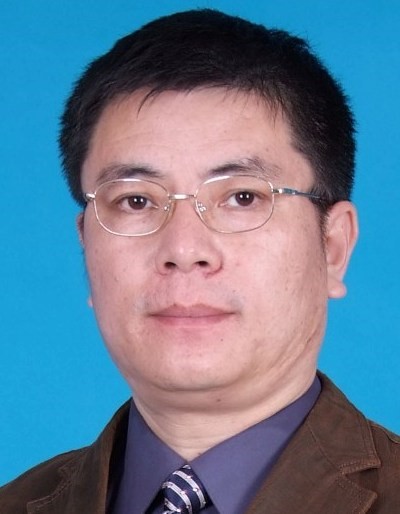
Nanyang Technological University
Singapore
Bio Xie Ming received the B.Eng degree in control and automation engineering from East-China Institute of Textile Technology (now, under the name of Donghua University, Shanghai, China). Subsequently, as a recipient of the nation's prestigious overseas scholarship of Chinese government, he has completed the postgraduate studies and doctorate research works, and has received the Master degree from the University of Valenciennes (France) in 1986 as well as the PhD degree from the University of Rennes (France) in 1989. Since 1986, he has worked as Research Assistant at IRISA-INRIA Rennes, Expert Engineer at INRIA Sophia-Antipolis, Lecturer/Senior Lecturer/Associate Professor of Nanyang Technological University, Fellow of Singapore-MIT Alliance (SMA) (Affiliated with Innovation in Manufacturing Systems and Technology Program), Guest Professor of Huazhong University of Science and Technology (2002, 2006), Professor awarded by China's Jiangsu Provincial Government (2014), and Dean of College of Electrical Engineering and Control Science at Nanjing Tech University (2014-2016). He was the General Chair of 2007 International Conference on Climbing and Walking Robots (CLAWAR), the General Chair of 2009 International Conference on Intelligent Robotics and Applications (ICIRA), the Co-founder of the International Journal of Humanoid Robotics (SCI/SCIE indexed), Co-founder of Singapore-China Association for Advancement of Science and Technology, Co-founder of Robotics Society of Singapore. He has taught the courses such as Robotics, Artificial Intelligence, Applied Machine Vision, Measurement and Sensing Systems, Microprocessor Systems, and University Physics. In terms of scientific research, he has authored three books in English, two books in Chinese, and two edited books in English. He has published several book chapters, over 10 patents of invention, over 40 research papers in scientific journals and over 100 research papers in international conferences. He was the recipient of one best conference paper award from World Automation Congress, the recipient of one best conference paper award from CLAWAR, the recipient of one outstanding paper award from International Journal of Industrial Robot, the recipient of one Gold Prize (S$8K) from CrayQuest, the recipient of one Grand Champion Prize (S$15K) from CrayQuest, the recipient of one A-Star's Best Research Idea Prize (S$5K), the recipient of one Silver Medal from Dragon Design Foundation.
Title KnowNet: A Large Knowledge Model
Abstract With the rise of Artificial Intelligence, we are fortunate to witness the transition from achieving machine’s automation to achieving machine’s autonomy. On one hand, the success of Artificial Intelligence is guaranteed by the availability of big data which is the result of the formation of large systems that are interconnected by various networks. On the other hand, the importance of Artificial Intelligence is due to the urgent demand for self-intelligence by robots and machines of tomorrow. Interestingly, the critical step toward achieving machine’s self-intelligence is the ability of designing large knowledge models instead of improving existing databases. In this keynote speech, I will share with the audience our research works which aim at providing a general guiding principle for the design of a large knowledge model under the new paradigm of Artificial Intelligence.